ServicesAsphalt Shingle Roofing
Asphalt Shingle Roofing in Seal Beach
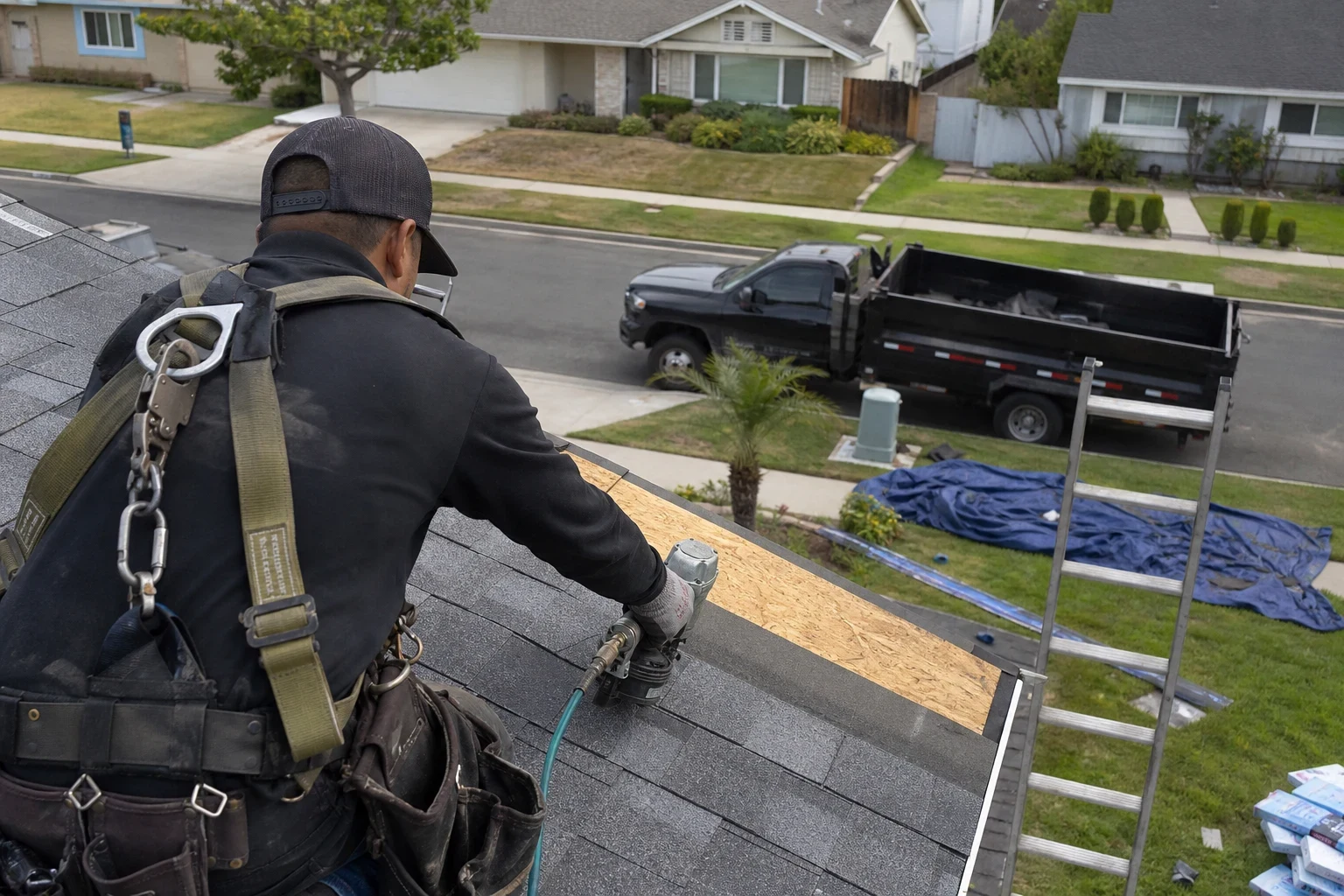
We install asphalt shingle roofs from the deck up. That means removing the old layers, fixing the wood beneath them, and replacing the flashing that past roofers reused. You get a clean, well-detailed roof fastened to something solid, with every choice explained before work begins.
A shingle roof built on what's really underneath
Asphalt shingles cover more houses in Southern California than any other roofing. They are light, come in a wide range of colors and profiles, and hold up well to sun, winter rain and salt air when they go on over sound decking with proper flashing.
The part you never see is what decides how long a new roof lasts. On a house that has been reroofed before, we often find a second layer of shingles nailed over the first, spaced boards left from an old wood shake roof, or flashing sealed with tar instead of replaced. We look at those layers first, then recommend a roof that suits the house you actually have.
We handle full shingle roofs, section replacements and matched repairs. If part of your home has tile or a low-slope area, our tile roofing and flat roofing work can tie in during the same project.
What a new shingle roof from us includes
- Tear-off to bare decking
- We remove every old layer instead of roofing over it. That lets us see the sheathing and the fasteners holding it, and it takes extra weight off the framing.
- Decking repair and re-sheathing
- Soft or delaminated plywood is cut out and replaced. Where we find spaced boards from a former shake roof, we lay solid sheathing over them so every shingle nail has wood to grip.
- Underlayment and leak barrier
- Synthetic underlayment covers the field. Self-adhering membrane goes in valleys, around chimneys and at roof-to-wall joints, where water lingers longest.
- New metal, not reused metal
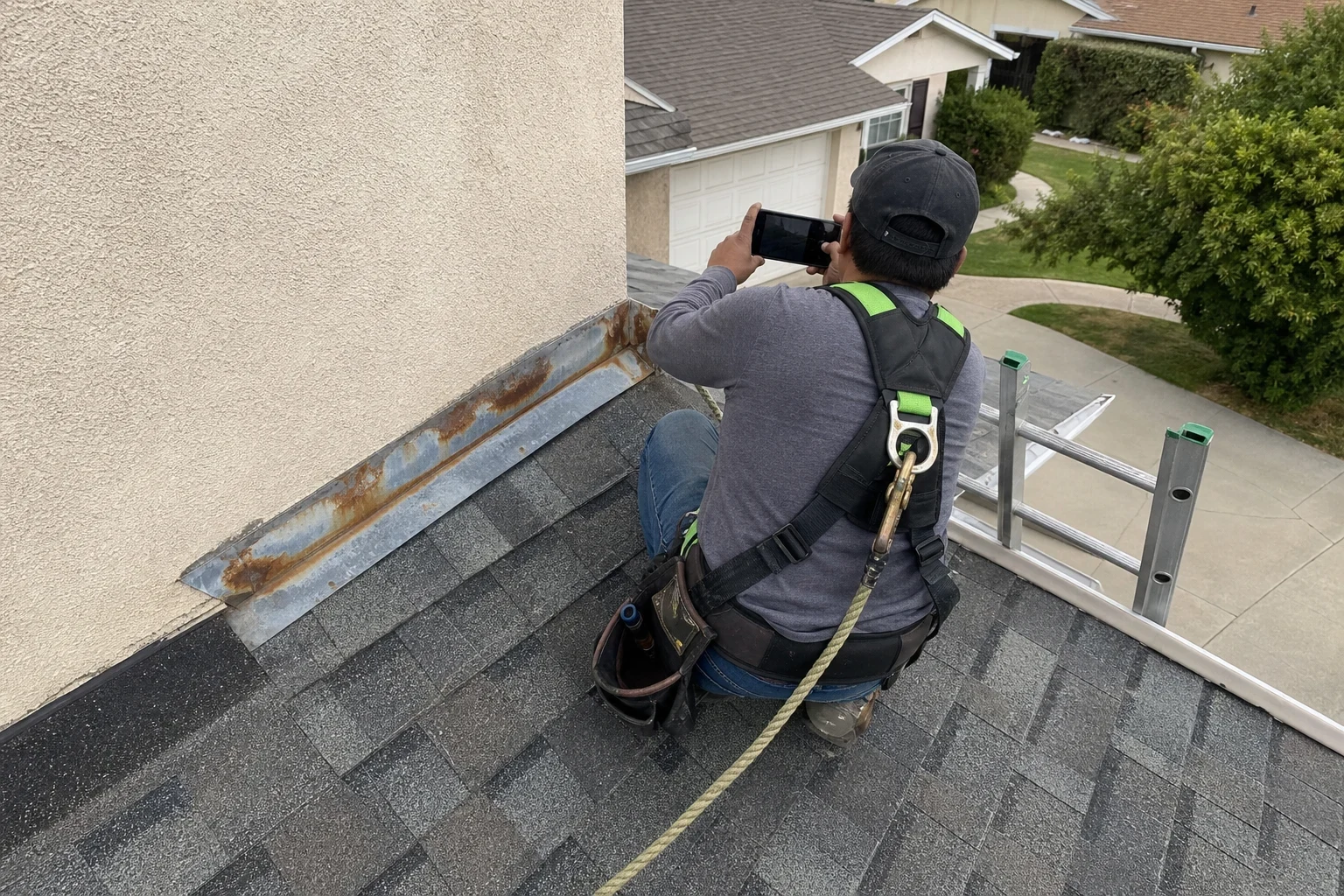
- Drip edge, step flashing and pipe boots are replaced as part of the job. Older galvanized flashing near the coast often rusts thin, and reusing it is a common reason a new roof leaks early.
- Shingles, ridge and ventilation
- Starter strips run along eaves and rakes, shingles follow the manufacturer's nailing pattern, and the ridge cap is finished by hand. We check intake and exhaust vents so attic heat and moisture can escape.
- Cleanup and a final walk
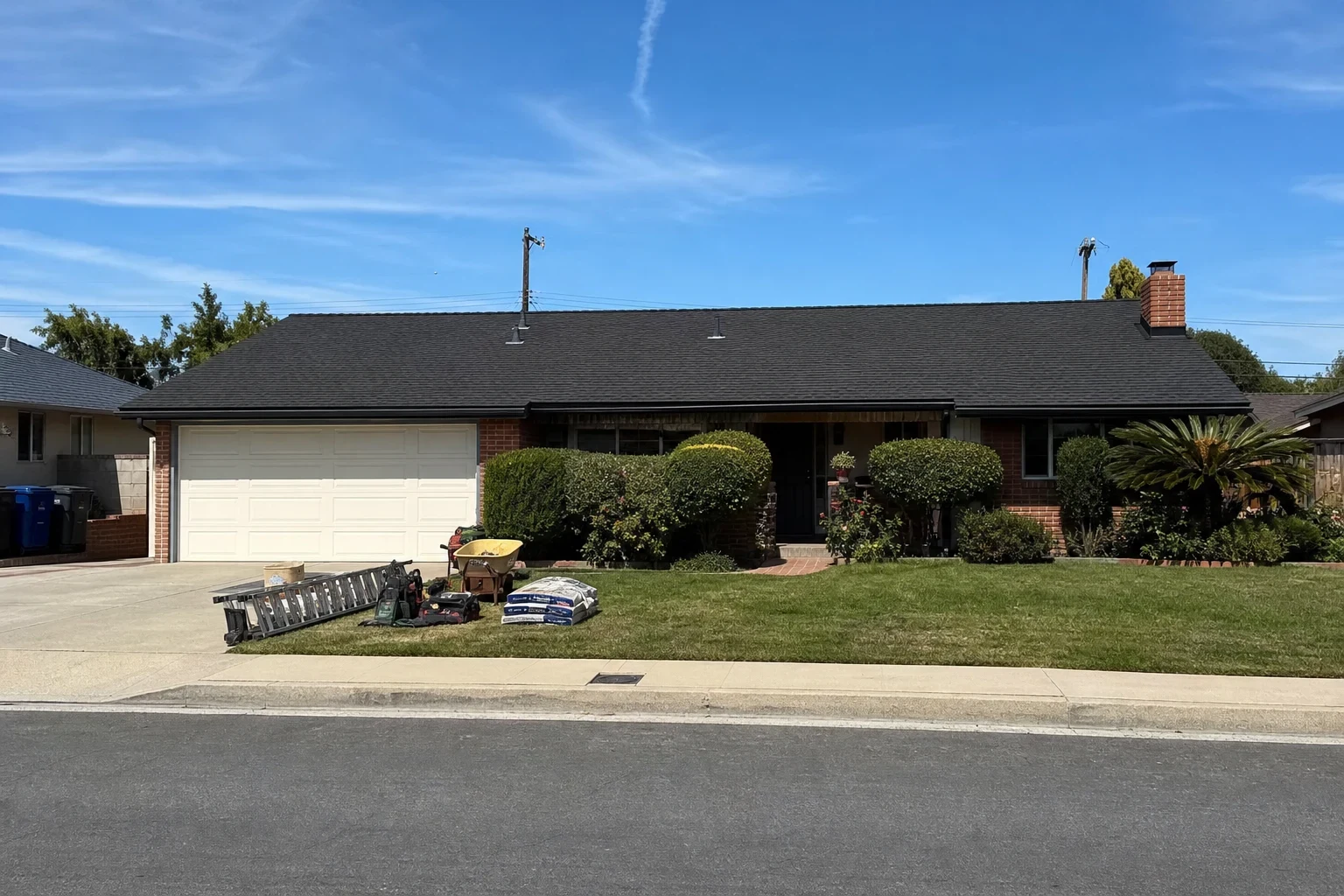
- Plants are covered during tear-off and the yard and driveway get a magnetic sweep for nails. At the end we walk around your home with you.
Signs your shingles are ready to be replaced
Grit in the gutters
Granules collecting in downspouts mean the shingle surface is wearing away. Once the asphalt underneath is exposed, sun breaks it down quickly.
Curled or cracked tabs
Edges that lift or cup let wind get underneath. Brittle tabs crack when they flex, and the damage spreads from there.
Patches on top of patches
Shingles in three slightly different colors and black tar smeared around vents tell us past repairs are holding the roof together.
Missing shingles after wind
A few blown-off shingles after Santa Ana gusts often point to aged sealant strips across the whole roof, not just one weak spot.
Stains or a musty attic
Ceiling spots, darkened sheathing or a damp smell upstairs mean water is already getting past the shingles. Our roof leak repair work can stop it while you plan the bigger job.
Moss on shaded slopes
Dark algae streaks are mostly cosmetic. Moss is different, because it holds water against the shingles and lifts their edges.
What sets the price of a shingle roof
We price every shingle roof from measurements of your home, not from a rate sheet. On an older house the biggest unknown is what sits under the current roof, so our estimate spells out how decking repairs are handled before tear-off begins. Financing is available through Service Finance Company, subject to credit approval.
Size and pitch
Roof area is measured in squares, and each square takes its own share of shingles, underlayment and crew hours. A steep roof slows the work down and calls for harnesses and roof jacks before anyone starts nailing.
Layers to remove
Every extra layer hiding under the current roof means more hours stripping and a heavier load hauled to the dump.
Decking condition
Rotted plywood, or spaced boards that need solid sheathing laid over them, is the most common added cost on older houses.
Shingle line and roof details
Architectural shingles cost more than basic three-tab. Chimneys, skylights, valleys and dormers each add flashing work.
Ventilation and permit
Adding ridge vents or opening blocked soffit vents is a modest line item. Permit fees are part of every estimate.
How a shingle reroof goes, start to finish
- 1
Inspection, roof and attic
We walk the roof, count the layers, check the flashing and look at the decking from the attic. You get photos of what we found.
- 2
Written estimate and choices
Our free written estimate lists each part of the job line by line. We go over shingle lines and colors with you and explain how any decking repairs will be priced. We pull the permit.
- 3
Tear-off and dry-in
We protect your landscaping, strip the old roof and inspect the deck. If we find rot, we show you before replacing it. The roof is covered with underlayment before we leave for the day.
- 4
Installation and finish
Flashing, shingles, vents and ridge cap go on in order, with attention at every valley and wall. Most single-family roofs take a few working days.
- 5
Final inspection and cleanup
The city inspector signs off on the permit, we sweep for nails once more, and we haul away every scrap of old roofing.
Asphalt shingle questions we hear
Can you put new shingles over my old ones?
It can be done in some cases, but we don't recommend it. An overlay hides the decking and the old flashing, which is where most problems on an older roof start. It also adds weight and can shorten the life of the new shingles.
Should I choose architectural or three-tab shingles?
Most of our customers choose architectural shingles. They are thicker, resist wind better and give the roof more depth and shadow line. Three-tab still works on a tight budget, and we can show you both on the estimate.
Do I need to leave the house during the work?
No. Expect noise during tear-off, and plan to keep cars out of the driveway and pets indoors. Some dust can sift into the attic, so we suggest covering anything stored up there.
Will insurance pay for a new shingle roof?
It depends on the cause. Sudden wind or storm damage is often covered, while normal aging usually isn't. We work directly with your insurance claim by documenting the damage and meeting the adjuster, though the adjuster makes the decision. Our storm damage repair page explains more.
Can you match my existing shingles for a repair?
Often, but older colors and styles get discontinued, and even an exact match will look cleaner than the weathered shingles around it for a while. We bring samples to compare in daylight. Our roof repair page covers smaller fixes.
Start with a look at what's under your shingles
We'll check the layers, the decking and the flashing, then explain what your roof needs in plain terms. The inspection and written estimate cost you nothing.