ServicesRoof Inspections
Roof Inspections in Seal Beach That Read Every Old Repair
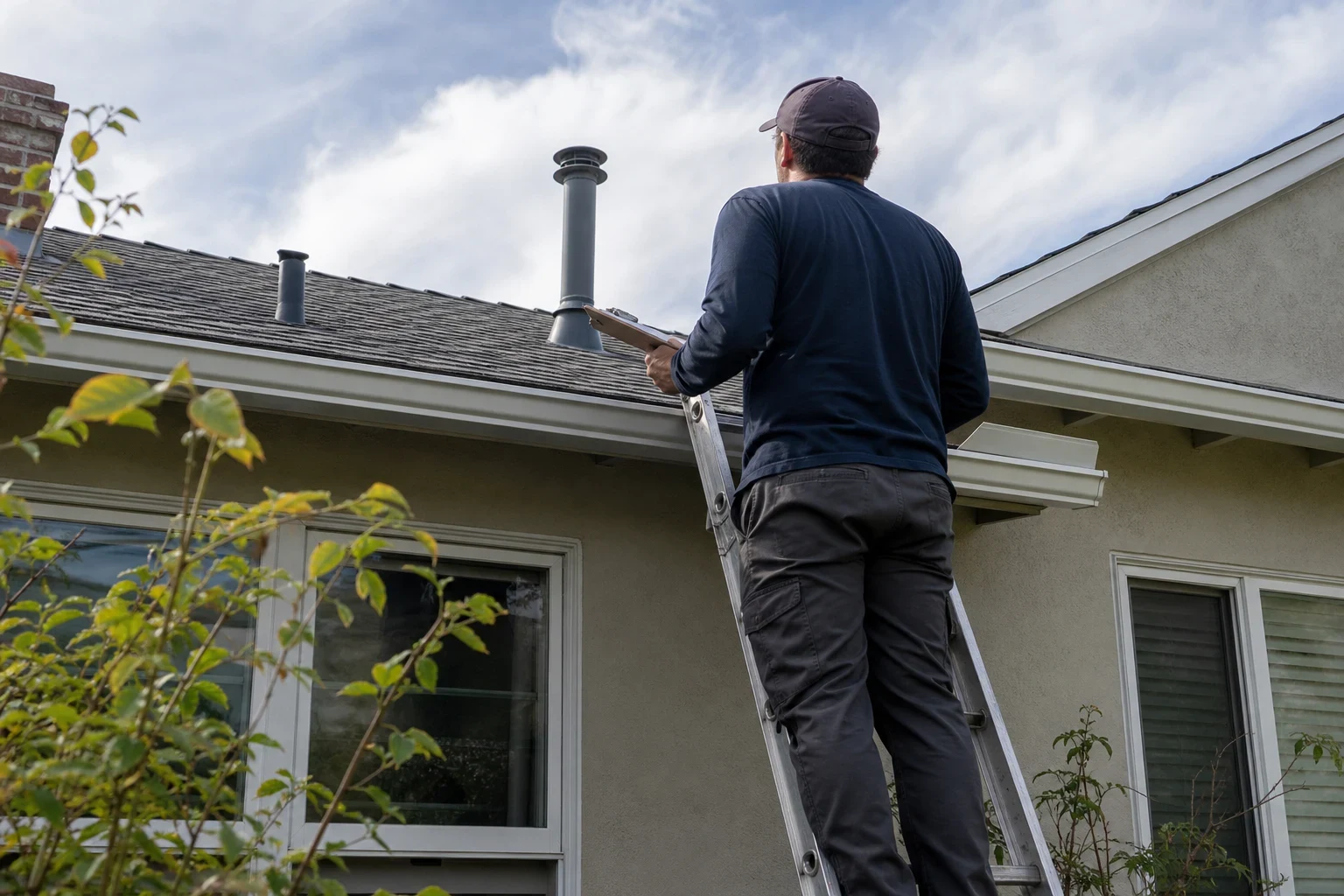
Older roofs carry a history: patches from past owners, flashing that has outlived its fasteners, layers no one wrote down. Our roof inspection walks the whole surface and the attic below, then explains what we found in plain words, with photos, before anything is recommended.
What a Roof Inspection Tells You
A roof can look fine from the driveway and still be failing at the seams. We go up, look closely and come back down with a clear picture of its condition: how much life the roofing has left, which past repairs are holding and which are quietly letting water in.
On older houses the surprises tend to sit where two eras meet. A newer field of shingles nailed over original felt, a skylight framed by a previous owner, a vent pipe sealed with a tube of mastic years ago. We note each one and tell you whether it matters.
The inspection is free. You get the findings either way, and if work is needed you can ask for a free written estimate on the spot or take your time.
What We Check on Your Roof
- The roofing surface
- We look at shingles, tile or flat membrane for cracking, granule loss, slipped pieces and soft spots underfoot. On tile we step carefully on the strongest points and lift a few pieces where needed to see the underlayment beneath.
- Flashing and penetrations
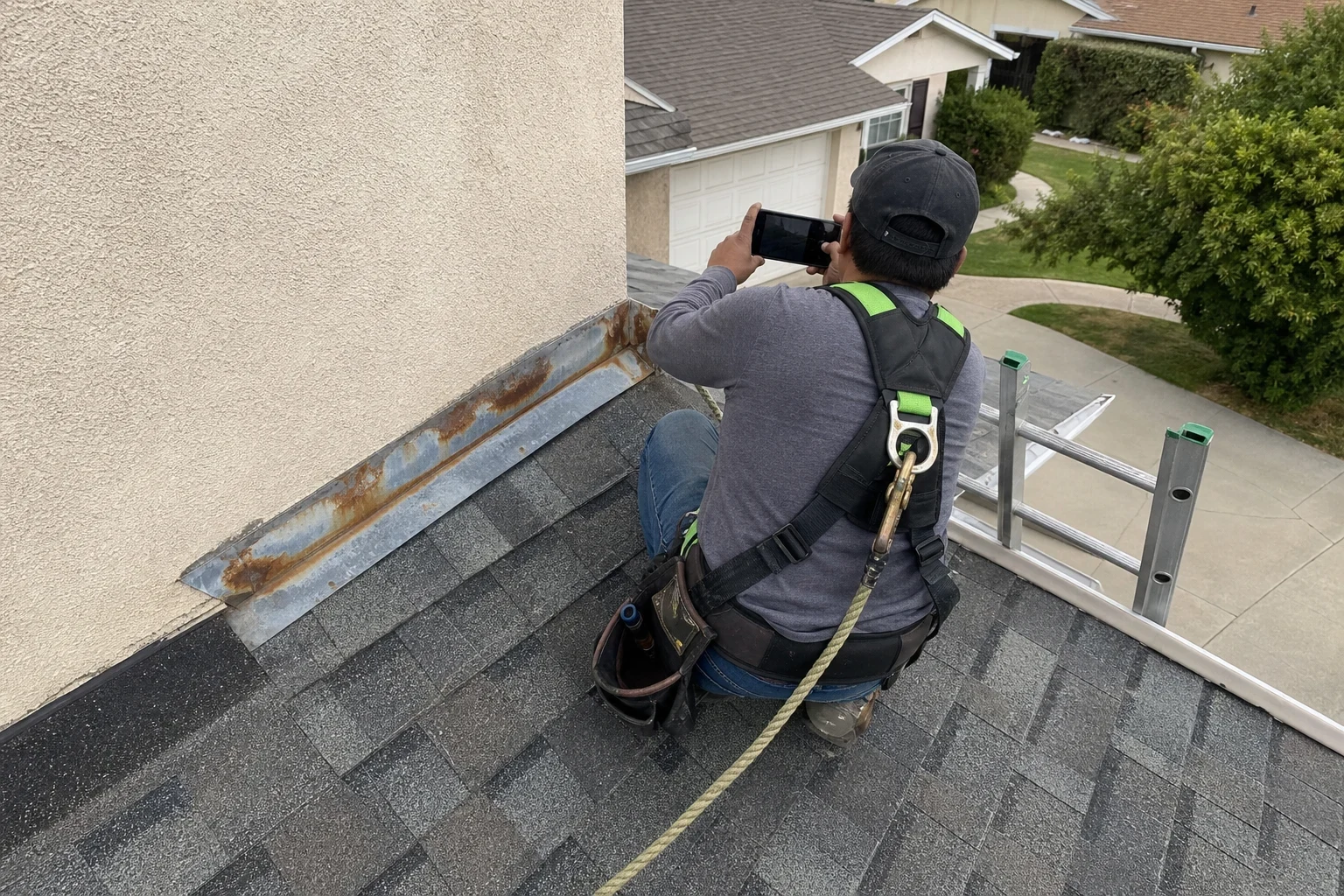
- Chimneys, walls, vents and skylights are where most leaks start. We check that metal flashing is intact and properly lapped, and that old sealant has not dried out and pulled away. Salt air off the coast is hard on exposed nails and metal, so we look for rust and lifted edges.
- Past repairs
- We identify patches, mismatched materials and areas that were covered over instead of fixed. Some old repairs are sound. Others are hiding a soft deck, and we will tell you which is which.
- Attic and decking
- From inside, we look for water stains, daylight, damp insulation and sagging sheathing. We also check that the attic vents are open and moving air.
- Gutters and drainage
- Clogged or pulled-away gutters push water back under the roof edge. We check pitch, fasteners and downspouts as part of the visit.
Signs It Is Time for an Inspection
Stains on ceilings or walls
Even a faint brown ring means water found a path. The source is often several feet uphill from the stain.
You are buying or selling
An inspection before a sale tells you what the roof really needs, so repairs can be priced into the decision instead of discovered after.
No record of the last roof work
If you do not know when the roof was installed or who patched it, a look now gives you a baseline.
After a strong winter storm
Wind lifts shingle tabs and shifts tile without leaving obvious damage from the ground. A check after heavy weather catches loose pieces before the next rain.
Granules in the gutters or cracked tiles
Sand-like grit in the downspouts means shingles are wearing through. Broken or slipped tiles leave the underlayment exposed to sun.
What Shapes the Cost of Any Work That Follows
The inspection costs you nothing. If we find work to do, the written estimate depends on what we saw, not a rate sheet. These are the things that move it most.
The condition underneath
Rotted decking or deteriorated felt under a good-looking surface changes the scope. We price only what the inspection actually showed.
Material and its age
Matching an older tile profile or shingle color takes more sourcing than a current product. Clay and concrete tile also take more care to remove and reset.
How much past repair has to come out
Layered patches and roofing laid over an old roof add removal time and disposal.
Access and pitch
Steep slopes, tight side yards and two-story walls need extra safety setup and time.
How the Inspection Visit Runs
- 1
A short conversation first
We start by asking what you have noticed and what you know about the roof's history. Old paperwork helps, but it is not required.
- 2
On the roof
We walk the surface where it is safe to do so and photograph every concern, close up and in context, so you can see exactly where it is. Steep or fragile roofs are inspected from ladders and edges instead.
- 3
In the attic
If there is access, we check the underside of the deck, the insulation and the ventilation. This is often where hidden problems show first.
- 4
Findings, in order
Back on the ground, each picture gets explained one by one. Anything urgent is listed on its own, apart from items that can safely sit for a few seasons, and we tell you plainly which old patches will keep holding and which will not. If you would like a free written estimate, that comes next.
Questions About Roof Inspections
How much time does an inspection take?
Plan on roughly an hour, a bit more for a big or complex roof. Access to the attic and the number of past repairs affect it most. We never hurry the visit to stay on schedule.
Are you going to say I need a new roof no matter what?
No. A lot of the roofs we inspect need a focused roof repair rather than replacement. When replacement is the honest answer, we show you the photos behind it and explain why a repair would not hold.
Will walking on my tile roof break it?
We know which parts of a tile carry weight and which crack, and we place our feet with that in mind. Sections too brittle to walk get inspected from a ladder. If a tile cracks during the visit, we let you know and replace it.
Can you help with an insurance claim?
Yes. We work directly with your insurance claim, and our photos and written findings give the adjuster a clear record. Coverage is the adjuster's decision; we explain what we saw and what fixing it involves.
What if I can't pay for all the work at once?
Financing is available through Service Finance Company, subject to credit approval. We can also help you order the work so the most urgent items get done first.
Find Out What Your Roof Has Been Hiding
We will look at the roof, the attic and every old patch, then walk you through the photos. You decide what happens next.