ServicesFlat Roofing
Flat Roofing in Seal Beach That Sheds Water and Holds Up
Low-slope roofs tend to give out without much warning, most often at a seam, a drain or a patch from years ago. We look below the surface to learn what is really going on, then repair or replace the roof with materials that stand up to coastal sun and winter rain.
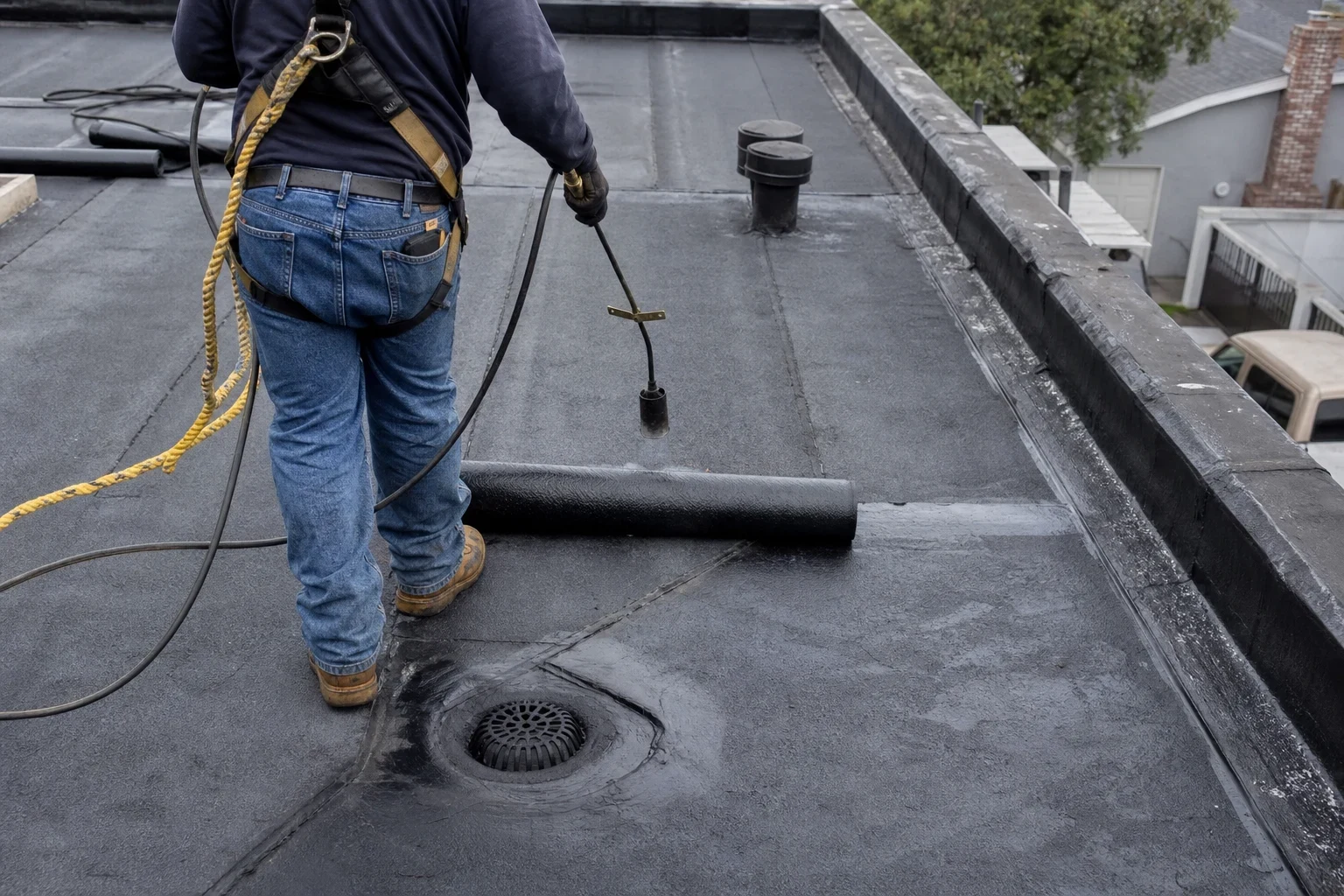
What Flat Roofing Covers on an Older House
Many houses in the area carry a low-slope section somewhere: a family room addition, a garage, a covered patio or the main roof of a mid-century design. These roofs work differently from a pitched roof. Water does not run off quickly, so every seam, drain and wall joint has to be right.
On older homes we often find several generations of work stacked on one deck: gravel-topped built-up roofing, a layer of rolled roofing, then a coating brushed over the lot. Each layer hides what is underneath. We take the time to read those layers before recommending anything, so you are paying to fix the cause rather than adding another cover.
When a repair will hold, we say so. When the deck is soft or the membrane is past saving, we explain why a full replacement is the better use of your money, with photos of what we found.
What Our Flat Roof Work Includes
Membrane options explained
We install modified bitumen and single-ply membranes such as TPO, and we walk you through how each handles heat, foot traffic and seams. Lighter-colored surfaces reflect sun and help keep the rooms below cooler.
Full tear-off to the deck
On a replacement we remove the old layers down to the wood. That is the only way to see rot, sagging or old fastener damage, and it keeps weight off the framing.
Deck and slope correction
Soft or delaminated sheathing is replaced. Where water has been pooling for years, we can add tapered insulation or crickets to move it toward the drains.
Drains, scuppers and edges
We clear, reset or replace roof drains and scuppers, and finish edges with metal that ties properly into your gutters.
Wall and curb flashing
Where the flat roof meets a stucco wall, a skylight or an HVAC curb, we rebuild the flashing rather than smearing sealant over the old joint. These transitions are where most older low-slope roofs leak.
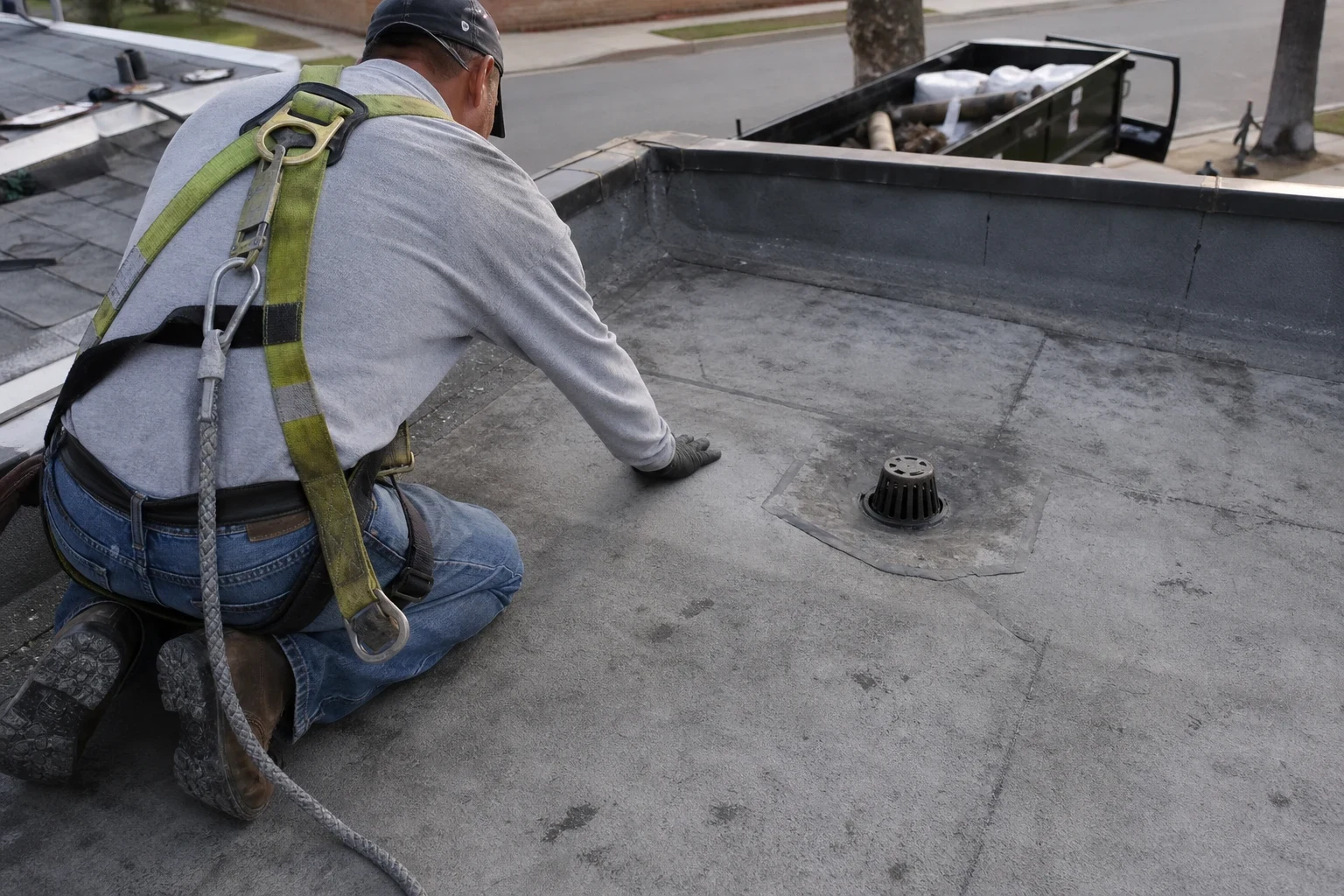
Signs Your Flat Roof Needs Attention
- Water sitting after rain
- Ponding that lingers more than a couple of days after a storm points to sagging deck or blocked drains. Standing water breaks down membranes and finds every weak seam.
- Blisters and bubbles
- Raised pockets in the surface mean moisture or air is trapped beneath. Left alone, they crack open and let water straight in.
- Cracked or alligatored surface
- A web of fine cracks, often on older coated or rolled roofing, shows the material has dried out under years of sun.
- Stains on ceilings below
- Brown rings in an addition or garage ceiling usually trace back to a seam or wall joint, sometimes several feet from where the stain shows.
- Patches on top of patches
- If you can count layers of tar and fabric at the same spot, the underlying problem was never fixed.
How a Flat Roof Job Runs
- 1
Inspection and photos
We walk the roof, check drains and flashings, probe soft areas and look at the ceilings below. You get photos and a plain account of what we saw.
- 2
Written estimate
Your free written estimate lists the membrane, deck work, drainage changes and flashing line by line, along with any permit the work requires. Financing is available through Service Finance Company, subject to credit approval.
- 3
Preparing the site
We protect plants, windows and walkways below the work area and set up a clear path for debris so the rest of your home stays undisturbed.
- 4
Tear-off, repair and install
Old layers come off, the deck is repaired, slope is corrected where needed, and the new membrane goes down with seams sealed and edges finished in metal. Most residential flat sections are done in a short, planned window.
- 5
Water test and cleanup
We check drainage, sweep for nails and debris, and walk the finished roof with you so you see how it was put together.
What Sets the Cost of a Flat Roof
On a flat roof, the size is only one piece of the price. The larger differences come from the old layers and the wood sitting under the membrane, so we prefer to open a questionable spot at the inspection rather than guess. Each item below is its own line on your estimate, so nothing turns up later unannounced.
- How many old layers there are
- Each stacked roof adds removal labor and disposal. Built-up roofing topped with gravel weighs more and takes longer to strip.
- State of the deck
- Soft or rotted sheathing has to come out before any new membrane is laid. We estimate the amount at the inspection and confirm it when the roof is opened.
- Membrane and insulation
- Single-ply, modified bitumen and tapered insulation each come with their own material and labor costs.
- Drainage and joints
- Moving drains, adding scuppers or rebuilding flashing at walls, skylights and equipment curbs is detail work, and it is what keeps leaks from coming back.
Questions About Flat Roofs
- Could you coat my old flat roof rather than replace it?
- In some cases. A coating can add years to a membrane that is still sound and dry below. It does nothing for wet insulation, a soft deck or split seams, and putting it over those seals the problem in. We test for moisture and check the deck first, then tell you plainly which group your roof belongs in.
- What membrane works best on a home near the ocean?
- On most houses the choice is between TPO and modified bitumen. Installed well, both stand up to sun and salt air. Which one fits depends on how often the roof is walked on, how it meets your walls and the surface color you prefer, and we go over the tradeoffs at your home.
- Will water stop pooling once the roof is new?
- When pooling is caused by a sagging deck or badly placed drains, we can fix it with deck repair, tapered insulation or extra drains. Some water after a storm is normal on a low-slope roof, but it should be gone within a day or two.
- Will insurance pay for flat roof damage?
- That depends on your policy and on whether the damage was sudden or came with age. We work directly with your insurance claim and supply photos and a plain description of the damage, while the coverage decision belongs to your adjuster.
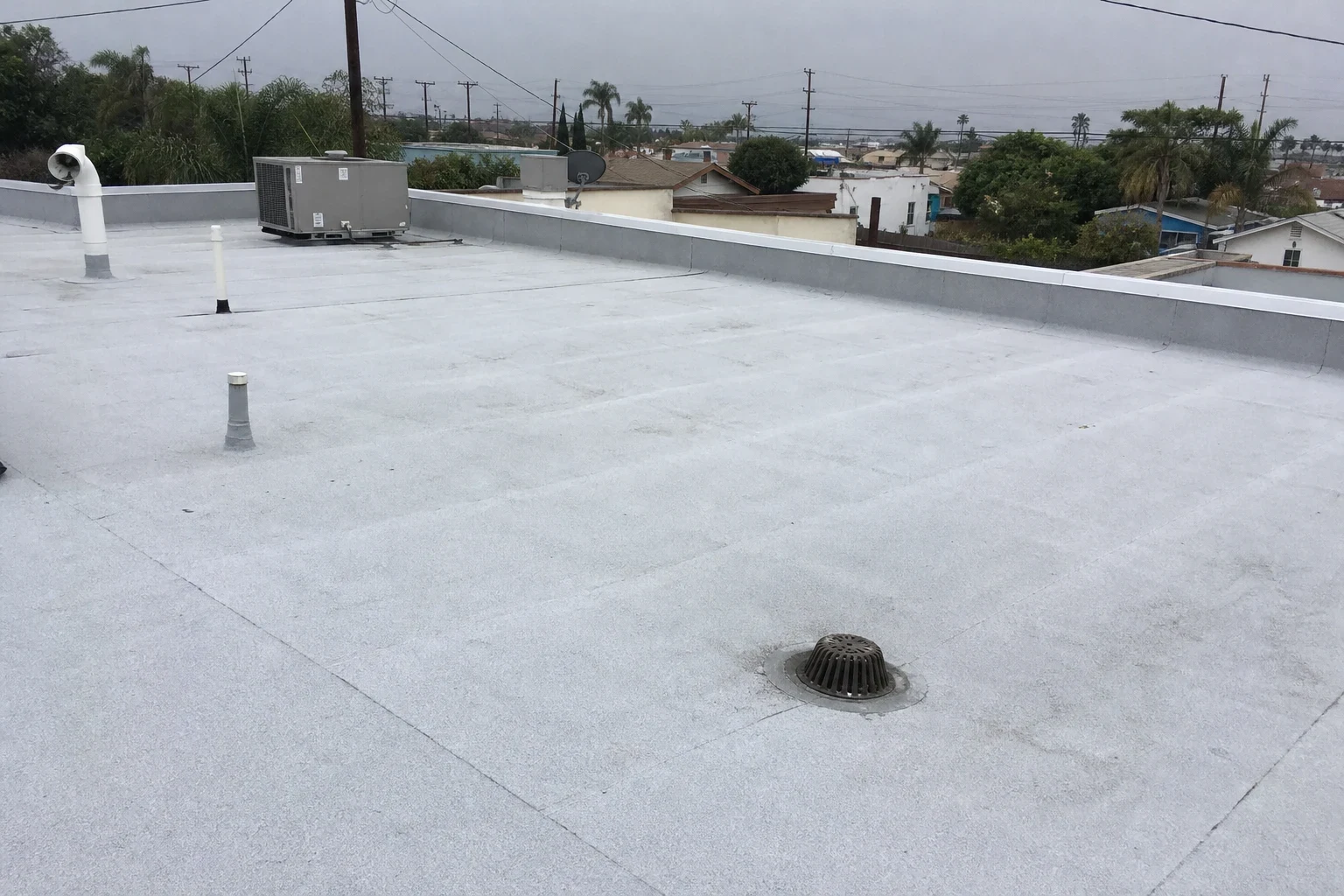
Find Out What Your Flat Roof Needs
We will look under the old patches, check the drains and seams, and give you a straight answer on repair or replacement. We work in Seal Beach and nearby towns including Long Beach, Los Alamitos and Huntington Beach.